

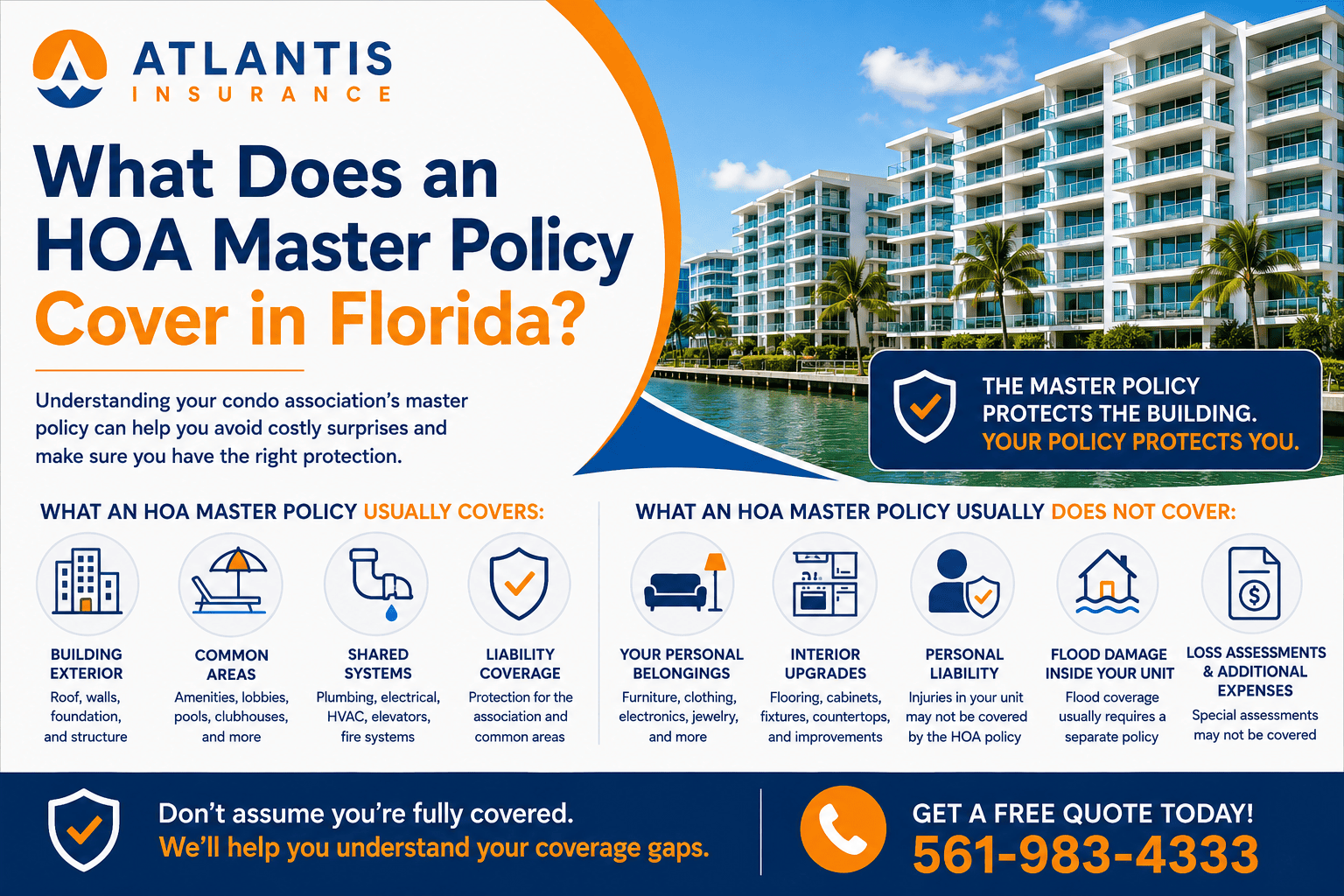
What Does an HOA Master Policy Cover in Florida?
Many Florida condo owners assume the condo association’s master insurance policy protects everything in the building, including their personal unit.
That is one of the biggest misunderstandings in condo insurance.
An HOA master policy, also called a condo association master policy, usually protects the building and common areas. But it may not fully protect your personal belongings, interior upgrades, liability exposure, flood damage, or special assessments.
If you own a condo in Florida, understanding the difference between the HOA master policy and your personal condo insurance policy is extremely important.
At Atlantis Insurance, we help Florida condo owners review these coverage gaps so they can better protect their property, finances, and peace of mind.
What Is an HOA Master Policy?
An HOA master policy is the insurance policy purchased by the condo association.
It is designed to protect the association’s shared property and common interests. Depending on the association documents and insurance structure, the master policy may cover certain parts of the building, common areas, and shared systems.
In Florida, the HOA master policy is especially important because condo buildings face risks such as hurricanes, wind damage, water intrusion, fire, liability claims, and costly repairs.
However, the master policy does not replace your personal condo insurance.
Your personal condo insurance policy is usually still needed to protect what the association policy does not cover.
Main condo insurance page:
https://www.atlantisinsurance.com/personal-insurance/condo-insurance/
What Does an HOA Master Policy Usually Cover?
Coverage depends on the association documents, bylaws, and insurance policy. However, many HOA master policies may cover:
Building Exterior
The master policy may cover exterior building components such as:
-
Roof
-
Exterior walls
-
Foundation
-
Elevators
-
Hallways
-
Stairwells
-
Shared structural areas
This is one of the main reasons condo owners pay association dues.
Common Areas
The HOA master policy may also cover shared spaces such as:
-
Lobbies
-
Clubhouses
-
Pools
-
Fitness rooms
-
Parking areas
-
Walkways
-
Mailrooms
-
Security gates
If damage occurs to these areas from a covered cause of loss, the association’s policy may respond.
Shared Building Systems
Some master policies may cover shared building systems, including:
-
Plumbing systems
-
Electrical systems
-
HVAC components
-
Fire suppression systems
-
Elevators
-
Security systems
However, the line between association responsibility and unit owner responsibility can vary by building.
That is why condo owners should review the association documents carefully.
Bare Walls vs. All-In Coverage
One of the most important things condo owners should understand is whether the HOA master policy is written on a “bare walls” or broader coverage basis.
Bare Walls Coverage
A bare walls policy generally covers the building structure and common areas but may not cover much inside your unit.
This means you may be responsible for:
-
Flooring
-
Cabinets
-
Countertops
-
Fixtures
-
Appliances
-
Interior walls
-
Built-ins
-
Upgrades
If your association has a bare walls policy, your personal condo insurance becomes even more important.
All-In or Single Entity Coverage
Some master policies may cover more of the original interior building features.
However, even broader master policies may not cover:
-
Personal belongings
-
Luxury upgrades
-
Custom improvements
-
Personal liability
-
Additional living expenses
-
Flood damage
-
Certain assessments
The exact coverage depends on the policy and condo documents.
What an HOA Master Policy Usually Does NOT Cover
Even when the association has strong insurance, condo owners can still have major coverage gaps.
An HOA master policy usually does not fully cover:
Your Personal Belongings
The association policy generally does not cover your furniture, clothing, electronics, jewelry, artwork, or personal items.
Your personal condo insurance policy may help protect your belongings.
Interior Upgrades
If you upgraded your condo with custom flooring, cabinets, countertops, lighting, built-ins, or luxury finishes, those improvements may not be fully covered by the master policy.
This is especially important for luxury condo owners.
Luxury condo insurance article:
https://www.atlantisinsurance.com/blog/luxury-condo-insurance-in-florida-2026-guide
Personal Liability
If someone is injured inside your unit, the HOA master policy may not protect you personally.
Your condo insurance policy can help provide personal liability coverage.
Additional Living Expenses
If your condo becomes unlivable after a covered claim, the association policy may not pay for your temporary housing, meals, or relocation expenses.
Your personal condo policy may include loss of use or additional living expense coverage.
Flood Damage Inside Your Unit
Standard condo insurance and many HOA policies may not fully cover flood damage.
Flood damage from storm surge, rising water, heavy rain accumulation, or coastal flooding often requires separate flood insurance.
Flood insurance article:
https://www.atlantisinsurance.com/blog/do-condo-owners-need-flood-insurance-in-florida-2026-guide
Loss Assessments
If the association has a large deductible, insufficient limits, or an uncovered loss, condo owners may receive a special assessment.
Your personal condo policy may include loss assessment coverage, but limits vary.
Loss assessment article:
https://www.atlantisinsurance.com/blog/loss-assessment-coverage-for-florida-condo-owners-2026-guide
Why Florida Condo Owners Need to Review the Master Policy
Florida condo insurance is different from many other states because the risk environment is more severe.
Condo buildings in Florida face:
-
Hurricanes
-
Windstorm damage
-
Flooding
-
Water intrusion
-
Aging building systems
-
High repair costs
-
Large association deductibles
-
Increasing insurance premiums
-
Special assessments
Because of these risks, condo owners should not assume the HOA master policy is enough.
A strong personal condo insurance policy can help fill the gaps.
Hurricane Deductibles Can Create Big Problems
Many Florida condo associations carry large hurricane deductibles.
These deductibles may be based on a percentage of the building’s insured value, which can create a major financial burden after a storm.
If the association must pay a large deductible, unit owners may be assessed for their share.
That is why loss assessment coverage is so important for Florida condo owners.
Water Damage and Plumbing Claims
Water damage is one of the most common condo claim issues.
A leak may start in:
-
Your unit
-
A neighboring unit
-
A common wall
-
A roof system
-
A shared plumbing line
-
An HVAC system
Determining responsibility can be complicated.
The HOA master policy may cover some parts of the damage, while your personal condo policy may need to cover your interior property, improvements, or belongings.
Seasonal Condo Owners Should Be Extra Careful
Seasonal residents and snowbirds should pay close attention to the HOA master policy and their own condo coverage.
If your Florida condo sits vacant for part of the year, damage may go unnoticed.
Seasonal condo owners should consider risks such as:
-
Undetected leaks
-
Mold
-
Hurricane damage
-
Theft
-
Delayed repairs
-
Flood exposure
Seasonal condo insurance article:
https://www.atlantisinsurance.com/blog/condo-insurance-for-seasonal-residents-in-florida-2026-guide
Questions to Ask About Your HOA Master Policy
Before choosing condo insurance, Florida condo owners should ask:
-
What does the HOA master policy cover?
-
Is the policy bare walls, single entity, or all-in?
-
What is the hurricane deductible?
-
Does the association carry flood insurance?
-
What are the master policy limits?
-
Are interior improvements covered?
-
What does the unit owner need to insure?
-
Could owners be assessed after a major claim?
-
Are there special insurance requirements in the bylaws?
These answers can help determine how much personal condo insurance you may need.
How Personal Condo Insurance Helps Fill the Gaps
A personal condo insurance policy may help cover:
-
Personal belongings
-
Interior improvements
-
Personal liability
-
Additional living expenses
-
Loss assessment coverage
-
Certain water damage claims
-
Optional endorsements
-
Higher limits for valuables
The goal is not to duplicate the HOA master policy.
The goal is to protect what the master policy does not cover.
Final Thoughts
An HOA master policy is important, but it is not enough by itself for most Florida condo owners.
The master policy may protect the building and common areas, but your personal condo insurance helps protect your unit, belongings, liability exposure, and financial responsibility for certain assessments.
Before a claim happens, review your HOA master policy, condo documents, and personal condo insurance limits.
Understanding the gaps now can help you avoid expensive surprises later.
Related Articles
Florida Condo Insurance
https://www.atlantisinsurance.com/personal-insurance/condo-insurance/
What Condo Insurance Does NOT Cover in Florida
https://www.atlantisinsurance.com/blog/what-condo-insurance-does-not-cover-in-florida-2026-guide
Loss Assessment Coverage for Florida Condo Owners
https://www.atlantisinsurance.com/blog/loss-assessment-coverage-for-florida-condo-owners-2026-guide
Do Condo Owners Need Flood Insurance in Florida?
https://www.atlantisinsurance.com/blog/do-condo-owners-need-flood-insurance-in-florida-2026-guide
Condo Insurance for Seasonal Residents in Florida
https://www.atlantisinsurance.com/blog/condo-insurance-for-seasonal-residents-in-florida-2026-guide
Luxury Condo Insurance in Florida
https://www.atlantisinsurance.com/blog/luxury-condo-insurance-in-florida-2026-guide


