

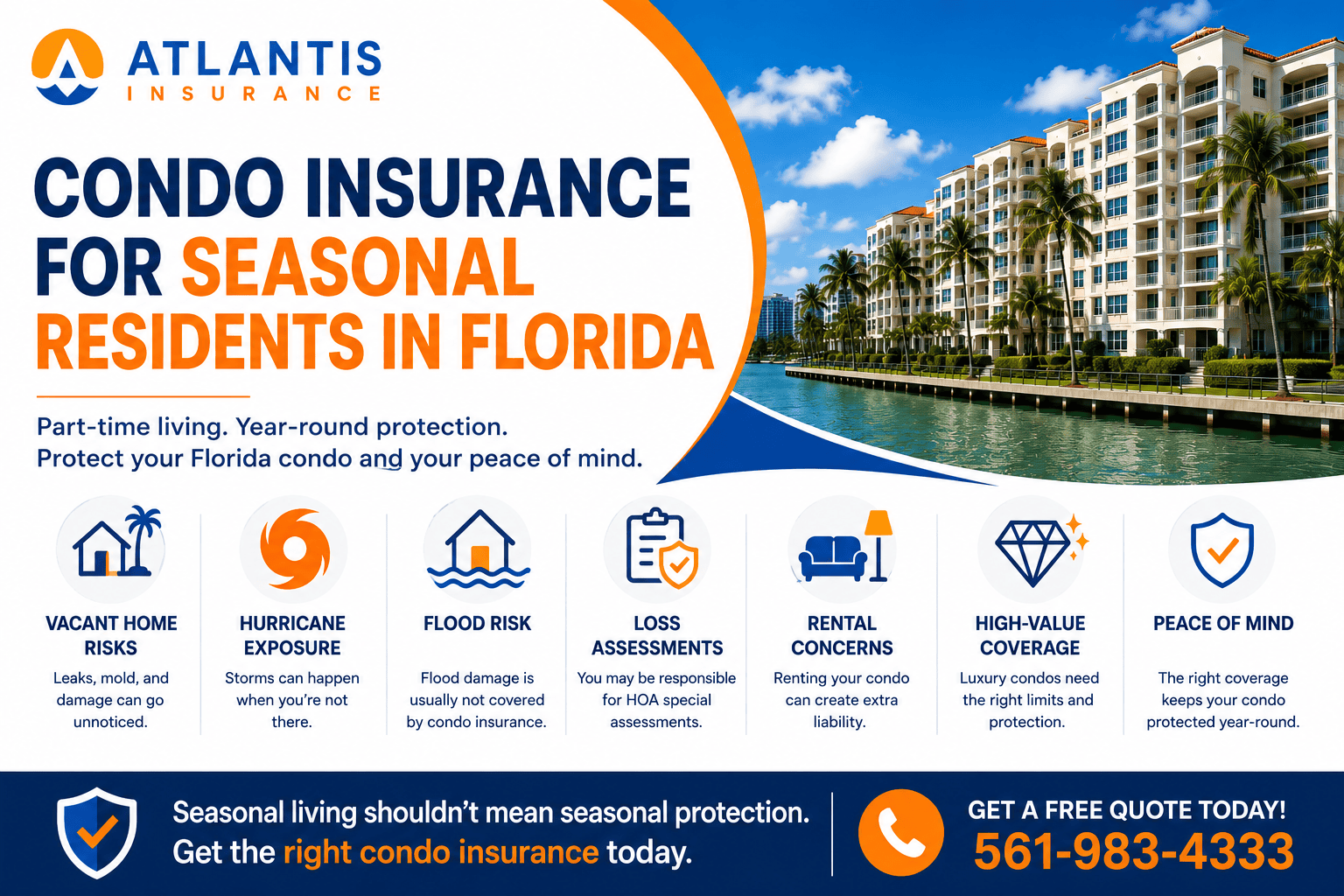
Condo Insurance for Seasonal Residents in Florida
Florida attracts thousands of seasonal condo owners every year.
Whether you own a winter residence in Miami, Naples, Fort Lauderdale, Boca Raton, West Palm Beach, Clearwater, or the Florida Keys, owning a condo part-time creates unique insurance risks that many seasonal residents do not fully understand.
A condo that sits vacant for weeks or months at a time may face very different exposures than an owner-occupied primary residence.
At Atlantis Insurance, we help Florida condo owners understand how seasonal occupancy can affect condo insurance coverage, water damage claims, hurricane exposure, liability risks, and policy limitations.
Why Seasonal Condo Owners Face Different Risks
Many Florida condos remain unoccupied for extended periods during the year.
Insurance companies often view vacant or seasonal properties as higher risk because problems may go unnoticed longer.
Common seasonal condo risks include:
-
Water leaks
-
Pipe breaks
-
Mold growth
-
Hurricane damage
-
Theft
-
Storm intrusion
-
Air conditioning failures
-
Humidity-related damage
A small leak that might normally be discovered quickly can become a major loss if the condo is vacant for months.
Does Condo Insurance Cover Seasonal Homes?
Yes — but coverage may vary significantly depending on:
-
Occupancy type
-
Vacancy periods
-
Rental activity
-
Building location
-
Hurricane exposure
-
Condo association requirements
Some insurance carriers have restrictions for:
-
Seasonal occupancy
-
Vacant units
-
Secondary residences
-
Short-term rentals
-
Long-term unoccupied properties
This is why it is important to properly disclose how the condo is used.
Learn more:
https://www.atlantisinsurance.com/personal-insurance/condo-insurance/
Water Damage Is One of the Biggest Risks
Water damage is one of the most common condo insurance claims in Florida.
Seasonal condo owners face increased exposure because:
-
Leaks may go undetected
-
AC systems may fail
-
Humidity can create mold
-
Storm-driven rain may enter the unit
-
Neighboring unit leaks can spread
Many condo associations also require unit owners to maintain certain interior systems to reduce water damage risks.
Hurricane Exposure for Seasonal Residents
Florida condos face major hurricane exposure — especially in coastal areas.
Seasonal owners may not be in Florida when storms occur, which can complicate:
-
Emergency mitigation
-
Claims reporting
-
Repairs
-
Water extraction
-
Property inspections
After major storms, delayed response times can increase damage severity.
Flood Insurance Is Often Overlooked
Many seasonal condo owners mistakenly assume flood damage is automatically covered.
However, standard condo insurance policies usually do NOT cover flood damage.
Flood exposure may come from:
-
Storm surge
-
Heavy rainfall
-
Coastal flooding
-
Rising water
-
Overflowing canals
Even condo owners outside high-risk flood zones can experience flood losses.
Related article:
https://www.atlantisinsurance.com/blog/do-condo-owners-need-flood-insurance-in-florida-2026-guide
Seasonal Residents and Loss Assessments
After hurricanes or major building losses, condo associations may issue special assessments to unit owners.
These assessments can happen because:
-
HOA deductibles are high
-
Insurance limits are insufficient
-
Repairs exceed available funds
Seasonal residents are not exempt from these assessments simply because they live elsewhere part of the year.
This is why many condo owners carry loss assessment coverage.
Related article:
https://www.atlantisinsurance.com/blog/loss-assessment-coverage-for-florida-condo-owners-2026-guide
Renting Out Your Seasonal Condo
Many Florida condo owners rent their units seasonally when not occupying them.
This can create additional insurance concerns.
Some condo policies may not properly cover:
-
Short-term rentals
-
Airbnb activity
-
Tenant-caused damage
-
Liability involving renters
-
Loss of rental income
Owners should always confirm whether their condo is being used as:
-
Personal seasonal residence
-
Long-term rental
-
Short-term rental
-
Mixed-use occupancy
Luxury Seasonal Condos Need Specialized Coverage
High-value condos often require additional insurance planning.
Luxury seasonal condo owners may have:
-
High-end finishes
-
Waterfront exposure
-
Expensive furnishings
-
Custom interiors
-
Increased liability exposure
Standard condo insurance limits may not fully protect luxury properties.
Learn more:
https://www.atlantisinsurance.com/personal-insurance/high-net-worth-insurance/
Condo Association Rules Matter
Florida condo associations often have insurance requirements for unit owners.
These requirements may include:
-
Minimum liability limits
-
Water damage deductibles
-
Windstorm deductibles
-
Interior coverage obligations
-
Loss assessment recommendations
Reviewing association bylaws and master insurance policies is extremely important.
Seasonal Condo Hotspots in Florida
Seasonal condo insurance is especially important in:
-
Miami
-
Sunny Isles
-
Brickell
-
Naples
-
Boca Raton
-
Fort Lauderdale
-
West Palm Beach
-
Clearwater
-
Sarasota
-
Orlando vacation condo communities
These areas often combine:
-
Hurricane exposure
-
Flood exposure
-
High property values
-
Seasonal occupancy patterns
Final Thoughts
Owning a seasonal condo in Florida can be a great investment and lifestyle opportunity, but it also creates unique insurance risks that should not be overlooked.
Vacancy periods, hurricane exposure, water damage, flood risk, and condo association requirements can all affect your insurance needs.
Understanding how your condo is insured before a claim happens can help you avoid costly surprises later.
If you own a seasonal condo in Florida, reviewing your current condo insurance structure may help ensure your property and finances are properly protected.
Related Articles
Do Condo Owners Need Flood Insurance in Florida?
https://www.atlantisinsurance.com/blog/do-condo-owners-need-flood-insurance-in-florida-2026-guide
Loss Assessment Coverage for Florida Condo Owners
https://www.atlantisinsurance.com/blog/loss-assessment-coverage-for-florida-condo-owners-2026-guide
What Condo Insurance Does NOT Cover in Florida
https://www.atlantisinsurance.com/blog/what-condo-insurance-does-not-cover-in-florida-2026-guide
Florida Condo Insurance
https://www.atlantisinsurance.com/personal-insurance/condo-insurance/


